Same-Day Dental Implants in London: Are They Right for You?
Walk down Richmond Street on any weekday morning and you will see a steady stream of people heading to clinics for something more than a check-up. Over the last decade, same-day dental implants have moved from a niche service to a mainstream option in London, Ontario. Patients come in with failing teeth and leave the same day with fixed, natural-looking provisionals. It can feel like a small miracle, especially for someone who has lived with a loose denture or a broken front tooth. But the story behind that transformation is more than clever marketing. Success depends on careful planning, disciplined technique, and choosing cases where biology is on your side.
This piece draws on day-to-day realities in clinics that place and restore implants in Southwestern Ontario, including what to expect if you are comparing dental implants London Ontario providers, where same-day works well, and when a staged approach makes more sense. If you are weighing same-day treatment against fixed bridges, porcelain veneers, or even staying with dentures, the details below will help you decide.
What “same-day” actually means
Same-day refers to two related but distinct ideas. First, immediate placement, where the implant is inserted into the socket right after a tooth is removed. Second, immediate loading, where a temporary crown or bridge is attached to the implant on the same day. You can have immediate placement without immediate loading, and plenty of patients do. The phrase “teeth in a day” typically means both, especially for full-arch cases using four to six implants to support a provisional bridge.
For a single front tooth, the workflow might be a gentle extraction, implant placement, and a custom temporary crown bonded to a small connector. For a full upper arch, the team removes non-restorable teeth, places multiple implants at precise angles, and fixes a provisional bridge by late afternoon. In both scenarios, the key is stability. The newly placed implant must be secure enough that micromotion stays within a safe window during early healing.
The day itself, from a patient’s point of view
Arrive early for scans, impressions, and final checks. You will likely have had a cone beam CT in the weeks prior, and the lab has already milled or printed a provisional. After numbing, the surgeon removes failing teeth, cleans the sites, and places implants guided by the digital plan. You will hear terms like torque and ISQ. These are not for show. In immediate loading, many teams look for insertion torque typically in the 35 to 45 Ncm range and ISQ values around the high 60s or above, signals that the bone is gripping the implant strongly enough to handle a light bite. If stability is borderline, a responsible clinician will not load immediately. You will leave with a different plan rather than a compromised result.
By late day, the restorative dentist bolts in a provisional for an arch case or adapts a temporary crown for a single tooth. You will be told to keep the bite light on that tooth or bridge for several weeks, follow a soft diet, and keep the area surgically clean without scrubbing the tissues. The aesthetic result is usually very good right away, but the final shape and translucency come later with the permanent crown or bridge once the tissue has matured.
Who tends to do well with same-day implants
Candidacy is less about convenience and more about risk control. In practice, the best outcomes come when a few boxes are checked.
- Good bone volume and density on the scan, no major grafting required that day
- A stable bite with no heavy grinding or clenching that cannot be managed
- Non-smoker or light smoker willing to quit during healing
- Healthy gums and controlled medical conditions, such as well-managed diabetes
- Realistic expectations about diet, cleaning, and temporary aesthetics
If you are missing several back teeth, have a deep overbite that crashes the front teeth together, or grind at night and refuse a nightguard, you are at higher risk of overloading a fresh implant. That does not always rule you out, but it changes the plan. Sometimes we place the implant and wait to load, or we design a protective scheme that limits stress on new fixtures.
Situations where same-day is not the right first move
- Active infection with significant bone loss at the target site that needs decontamination and healing
- Uncontrolled systemic issues, such as a recent heart event, immune suppression without coordination from your physician, or uncontrolled diabetes
- Sites that require major bone grafting or a sinus lift before secure placement is possible
- Heavy, unmanageable bruxism with severe wear patterns and no willingness to use a nightguard
- Patients who cannot or will not follow a modified diet and hygiene instructions during healing
When any of these apply, the safer path is staged treatment. Placing the implant at a later date, or placing it now and loading after osseointegration, usually protects you from early failure.
Comparing same-day to staged implants
Traditional, staged implants remain the world’s baseline for a reason. The body needs time to knit bone to titanium, a process that takes about eight to twelve weeks in the mandible and often twelve to sixteen weeks in the maxilla. Immediate loading asks more of both bone and patient. If you have thick, dense bone and a cooperative bite, you can get a head start on function and appearance. If you have softer bone in the upper jaw or a delicate smile line, patience can pay off with more predictable soft tissue shaping and lower risk of micro-movement.
I keep careful notes on early failures. In my experience and in published data, immediate loading can show equal survival to delayed protocols in carefully selected cases. Outside those guardrails, failures cluster around two culprits: insufficient primary stability and premature heavy function. The fix is not clever marketing. The fix is case selection and discipline with diet.
If you are choosing between implants and dentures in London, Ontario
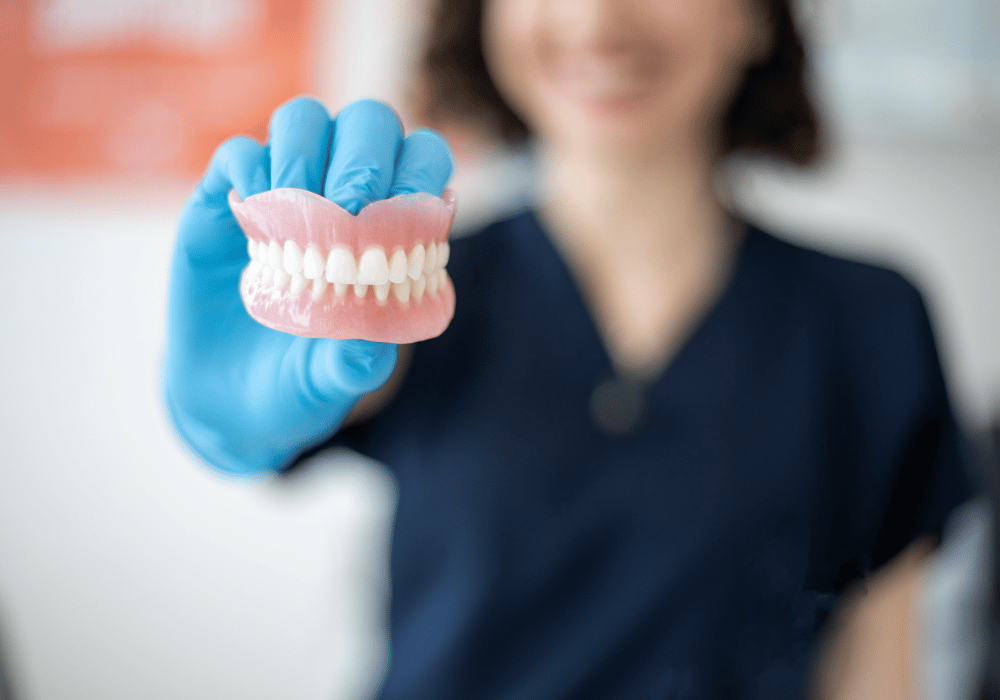
The daily contrast is stark. Removable dentures, even well-made ones, rest on soft tissue that changes over time. If you have worn a lower denture for years, you already know how it floats on the tongue and cheeks. Implants anchor teeth to bone. A full-arch implant bridge will feel more secure the first time you chew an apple than the best adhesive ever could.
That said, dentures remain a valid option for many. The upfront cost is lower, they can be made quickly, and for someone with significant medical issues, they avoid surgery. I meet plenty of patients searching for dentures London Ontario who end up with a hybrid plan: an upper denture that fits and looks good, combined with two implants in the lower jaw to snap in a more stable overdenture. It is not same-day in the strictest sense, but it reclaims function for a fraction of the cost of a full-arch fixed bridge.
Where porcelain veneers fit, and where they do not
Porcelain veneers are wonderful for reshaping and brightening healthy teeth. They cover the front surface to improve color, symmetry, and minor alignment. They are not a substitute for a missing tooth or for a tooth with a hopeless root fracture. If your front tooth has a vertical crack and mobility, a veneer cannot revive it. An implant crown can. On the other hand, if your teeth are intact but stained and slightly crooked, veneers may give you the change you want without surgery. The best plan may blend both. Replace the non-restorable lateral incisor with an implant and refresh the adjacent teeth with veneers to harmonize the smile.
Cost, timelines, and insurance realities
Numbers vary with complexity and with the clinic, so ranges are more honest than hard quotes here. In London, a single implant with abutment and crown commonly lands in the mid four figures, sometimes higher when bone grafting or custom components are needed. Full-arch immediate bridges supported by four to six implants frequently reach into the low to mid five figures per arch, especially when provisional and final prostheses are both included. Same-day itself is not inherently more expensive, but the extra planning, surgical time, and lab work for immediate provisionals add to the bill.
Insurance in Ontario tends to contribute to parts of the restorative phase, not the surgical placement of implants. Plans vary wildly. Some will help with the crown on top of an implant but exclude the implant fixture itself. Others will cover extractions and sedation but not the prosthetic components. Patients often combine health spending accounts, staged payments, and, in larger cases, financing. If a clinic offers a number that sounds implausibly low, ask what is included. Provisional? Final bridge? Extractions? Grafting? Follow-up hygiene? You want the whole picture, not a teaser price.
A brief story from the chair
A 54-year-old teacher came in after a bike fall. Her right central incisor had a vertical root fracture under a long-standing crown. She needed to be in front of students by Monday. On the scan, the bone was thick and the palatal plate intact, an ideal setup for immediate placement. We removed the tooth, placed a tapered implant with 45 Ncm insertion torque, and added a small graft to fill the socket gap. A custom temporary was shaped to support the gum line but kept out of occlusion. She left looking like herself, not like someone who had lost a front tooth. Three months later, the tissue contour was perfect, and the final crown matched her left central closely enough that even her family could not tell which was the implant.
The crucial pieces were not glamour. They were planning, primary stability, and a patient who respected the soft diet. She avoided biting into crusty bread on that side and used the other side to tackle tougher foods. Healing rewarded that discipline.
What a strong clinical workflow looks like
Behind a same-day result is a team that plans in three dimensions. A cone beam CT defines bone height, width, and proximity to critical anatomy. A digital wax-up sets the tooth positions that look and function best, then the software positions implants to support those teeth, not the other way around. Guided surgery sleeves and printed stents are common, though skilled surgeons can place freehand when anatomy is forgiving. Angulated multi-unit abutments are selected to keep screw access in the right place for a full arch.
The restorative dentist and the lab carry equal weight. A well-contoured provisional is not just a placeholder. It teaches the tissue where to sit and protects the implant from overload. If the temporary is too long, too thin, or too heavy in the bite, early failure can follow. When I audit cases, Article source I spend as much time on the provisional design as I do on the implant brand or the drill protocol.
Sedation, comfort, and recovery
Local anesthesia is standard, and many clinics offer oral sedation or IV sedation for longer sessions. Most patients describe the experience as pressure and vibration rather than pain. Swelling typically peaks at 48 to 72 hours and then recedes. A combination of cold compresses and anti-inflammatories works well. Antibiotics are used selectively, more often when extractions and grafting are involved.
The soft diet matters. Think scrambled eggs, yogurt, smoothies without seeds, pasta, fish, and well-cooked vegetables. Most people maintain a soft diet for two weeks, then begin to expand carefully. For full-arch immediate bridges, we ask for a truly soft diet for six to eight weeks. It is not overkill. Those first weeks are when bone remodels around the implant threads.
Risks, and how professionals minimize them
Early failure is the most feared risk. Even in good hands it happens occasionally. The typical rescue is to remove the implant, clean the site, graft if needed, and return in a few months for a second attempt. Most patients still reach the finish line with a permanent crown or bridge. Other issues include temporary crown loosening, sore spots under a new bridge, and, less commonly, nerve irritation in the lower jaw if anatomy is tight. A careful plan and intraoperative checks keep those risks low.
Smokers, especially heavy smokers, see higher rates of complications. Nicotine constricts blood vessels and impairs healing. The difference shows up in delayed integration and soft tissue recession. For patients who insist on smoking, I ask for a nicotine holiday before and after surgery and extra hygiene support. Not everyone will agree, and that is where honest conversation beats a hard sell.
Why the clinician’s specialty matters
If you search dental implants London, you will find general dentists, oral surgeons, and periodontists offering implant services. All three can do excellent work. The advantage of a dental implants periodontist is deep training in bone biology and soft tissues. They manage complex grafts, handle peri-implantitis if it arises, and coordinate gum shaping around front teeth where a millimeter decides the smile. A prosthodontist brings mastery in complex bite reconstruction and long-span bridges. The best outcomes often come from a team where the surgeon and the restorative dentist plan jointly with a lab they trust.
When evaluating a clinic in London Ontario, ask to see cases similar to yours. Not stock photos, but patient images with consent that show day-of placement, healing, and final results. Ask about their protocol when stability is insufficient for immediate loading. A good answer is not “it never happens” but “here is how we protect you when it does.”
Same-day for single teeth versus full arches
Single-tooth immediate cases, especially in the front, are common and predictable in the right bone. The temporary stays out of the bite and lets tissue sculpt around a custom emergence profile. The main pitfall is aesthetic, not mechanical. If the gum height of neighboring teeth is uneven, a perfect crown on the wrong gum line still looks wrong. Photographs, mock-ups, and sometimes soft tissue grafting earn their keep here.
Full-arch immediate cases, the classic “All-on-4” or “All-on-6” approach, deliver dramatic change in a single day. They open vertical dimension for worn-down bites, improve facial support in collapsed lips, and end the cycle of broken partials. Done well, they are transformative. The compromises are real too. Maintenance involves regular professional cleaning, screw checks, and the understanding that acrylic teeth and pink material will wear. Many patients choose to upgrade to a zirconia or hybrid final bridge for improved durability after the provisional period. That conversation should happen before treatment, not after the first chip.
Laboratory craft, not just hardware
Implant brands matter less than some brochures suggest. Most major systems integrate well and have decades of data. The artistry lives in the lab. A technician who sculpts a custom temporary that respects your phonetics and lip dynamics can make the difference between “good” and “I forgot it was fake.” On full-arch days in London clinics, you will often see a lab technician on site, adjusting the provisional as you speak vowels and smile. The few extra tenths of a millimeter they shave from the incisal edge can quiet a whistle or a lisp and let you return to work without a telltale sound.
Hygiene and long-term care
Peri-implant tissues demand the same respect as natural gums, sometimes more. A soft brush, low-abrasive paste, super floss under bridges, and a water flosser help keep biofilm at bay. Professional maintenance typically runs every three to four months for the first year, then every six months once stability is demonstrated. Expect your providers to take baseline measurements around implants, just like probing depths around teeth. Small changes call for early action. If you are prone to gum disease, the bacteria that caused it do not retire when you get implants. They adapt. Your hygiene must adapt too.
The reality of timelines, even with “same-day”
You may walk out with teeth on the day of surgery, but the calendar still matters. Tissues need months to mature before final crowns or bridges are installed. For a single front tooth, three to four months is common before the final impression. For full arches, four to six months is closer to the norm. During that window, the provisional protects the implants and gives you a real-life test drive for esthetics and function. Think of it as custom-fitting a suit. The first fitting is exciting. The last fitting is what you wear for years.
How to prepare for a same-day appointment
Call it common sense, but I list these items on a magnet for patients’ fridges. Arrange soft foods for a week. Set up a ride home if you are sedated. Clear your schedule for two to three days to ride out swelling. Stop smoking and avoid alcohol during early healing. Stock saline rinses and over-the-counter pain relief, and fill any prescriptions ahead of time. If you wear a nightguard, bring it. We will adjust cosmetic dentistry london ontario it to protect your new work. These small moves amplify success more than any fancy implant thread design.
Choosing the right path for you
If you are evaluating dental implants London Ontario options, meet at least two providers and ask frank questions. Are you a candidate for immediate loading or is delayed loading safer? What is the plan if day-of stability is insufficient? Who handles the surgery, who handles the teeth, and what lab will craft your provisionals and finals? How many similar cases does the team complete each month? Can they show healed results, not just day-of photos?
Same-day is not a badge of honor. It is a tool. When used in the right hands for the right cases, it gives you back your smile and your bite with astonishing speed. When biology or mechanics say to slow down, a staged plan can spare you setbacks and still deliver a lifetime result. If you are moving from a search for dentures London Ontario to something more stable, or comparing veneers, bridges, and implants, a thoughtful consultation will clarify the fit.
A final note from experience: the happiest same-day patients are not the ones with the flashiest before-and-after photos. They are the ones who, a year later, forget where the implant is when they floss. They eat comfortably, speak clearly, and require only routine maintenance. If that sounds like the end goal you want, the next step is simple. Find a team that treats same-day not as a race, but as a carefully paced handoff between surgeon, restorative dentist, and lab. Add your own discipline with diet and hygiene, and the odds tilt strongly in your favor.
Paradigm Dental — Business Info (NAP)
Name: Paradigm DentalAddress: 532 Adelaide St N, London, ON N6B 3J4, Canada
Phone: (519) 672-3232
Website: https://paradigmdental.ca/
Email: [email protected]
Hours:
Monday: 8:00 AM – 5:00 PM
Friday: 8:00 AM – 3:00 PM
Open-location code (Plus Code): XQV8+3Q London, Ontario
Map/listing URL: https://www.google.com/maps/place/Paradigm+Dental/@42.9926997,-81.2356417,17z/data=!4m7!3m6!1s0x882ef3007061d71f:0x772b512bba5c27cb!8m2!3d42.9926997!4d-81.2330668!15sChZQYXJhZGlnbSBEZW50YWwgTG9uZG9uWhgiFnBhcmFkaWdtIGRlbnRhbCBsb25kb26SAQ1kZW50YWxfY2xpbmlj4AEA!16s%2Fg%2F11rk021m3q
Embed iframe:
Socials (canonical https URLs):
Facebook: https://www.facebook.com/61577765603392/
https://paradigmdental.ca/
Paradigm Dental is a family dental clinic in London, Ontario providing general dentistry and a range of in-office dental care services.
Patients can request an appointment for routine exams and cleanings, restorative dental work, and other clinic services listed on the website.
The office address is 532 Adelaide St N, London, ON N6B 3J4, Canada.
To contact Paradigm Dental, call (519) 672-3232 or email [email protected].
Hours currently listed are Monday 8:00 AM–5:00 PM and Friday 8:00 AM–3:00 PM.
For directions and listing details, use the map listing: https://www.google.com/maps/place/Paradigm+Dental/@42.9926997,-81.2356417,17z/data=!4m7!3m6!1s0x882ef3007061d71f:0x772b512bba5c27cb!8m2!3d42.9926997!4d-81.2330668!15sChZQYXJhZGlnbSBEZW50YWwgTG9uZG9uWhgiFnBhcmFkaWdtIGRlbnRhbCBsb25kb26SAQ1kZW50YWxfY2xpbmlj4AEA!16s%2Fg%2F11rk021m3q.
Follow updates on Facebook: https://www.facebook.com/61577765603392/
Popular Questions About Paradigm Dental
Where is Paradigm Dental located?Paradigm Dental is located at 532 Adelaide St N, London, ON N6B 3J4, Canada.
How do I contact Paradigm Dental?
Phone: +1-519-672-3232
Email: [email protected]
Website: https://paradigmdental.ca/
What are the hours for Paradigm Dental?
Hours listed: Monday 8:00 AM–5:00 PM and Friday 8:00 AM–3:00 PM.
What services does Paradigm Dental offer?
The clinic lists services such as examinations and cleanings, fillings, crowns/bridges, dentures, root canal therapy, orthodontic options, dental implants, and other dental care services (availability can vary).
How do I get directions to Paradigm Dental?
Use the Google Maps listing for turn-by-turn directions: https://www.google.com/maps/place/Paradigm+Dental/@42.9926997,-81.2356417,17z/data=!4m7!3m6!1s0x882ef3007061d71f:0x772b512bba5c27cb!8m2!3d42.9926997!4d-81.2330668!15sChZQYXJhZGlnbSBEZW50YWwgTG9uZG9uWhgiFnBhcmFkaWdtIGRlbnRhbCBsb25kb26SAQ1kZW50YWxfY2xpbmlj4AEA!16s%2Fg%2F11rk021m3q
Landmarks Near London, ON
1) Victoria Park2) Covent Garden Market
3) Budweiser Gardens
4) Western University
5) Springbank Park